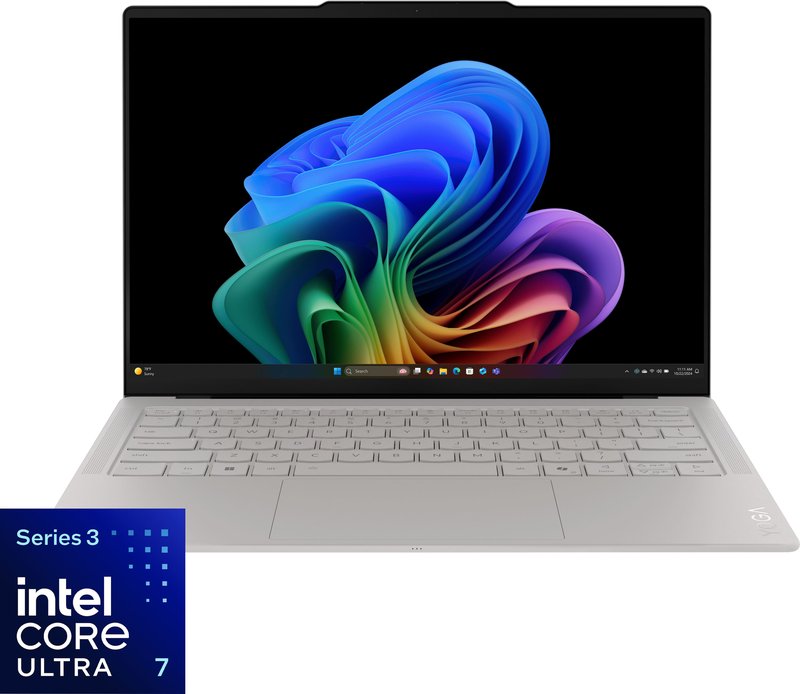
The Lenovo Yoga Slim 7i Ultra Aura Edition 14-inch Gen 11 is a useful first candidate for a graduate student who maintains a large local PDF library and writes in Windows. Start with the U.S. 32GB/1TB order and try the sharp OLED at the same text zoom you use in a reading room. Consider a MacBook Air M5 if your PDF and reference tools are already set up for macOS, and compare a matte-screen Framework where reflection and repairability matter more. Lenovo product specifications · US configuration page.
A scanned source can occupy hundreds of pages while still being difficult to search. The useful comparison is whether the laptop helps you navigate the scan, distinguish real page numbers from image positions, check a quote and save the reference for someone else to find. Work from sources you are permitted to copy into a sample project.
The shortlist at a glance
Start with the department’s indication about required software, classroom hardware and data storage. Then use sample materials to reproduce one representative working session. Compare local capacity while a reference and the actual editing tool stay open. Finish by deciding where you will read, where you will type and which work can move to an approved shared machine. Fit the order to those stages.
| US reference | Device mass | Screen | Battery | Best fit in this comparison |
|---|---|---|---|---|
| Yoga Slim 7i Ultra | 975 g starting | 14-inch 2880 × 1800 OLED touch | 75 Wh | Carrying large scans with a full Windows reference setup |
| MacBook Air 13 M5 | 1.23 kg listed | 13.6-inch 2560 × 1664 Liquid Retina | 53.8 Wh | A Mac-native reading, citation and writing workflow |
| Zenbook S 14 | about 1.2 kg listed for UX5406SA | 14-inch 2880 × 1800 OLED touch on the reference | 72 Wh | Windows with a high-resolution panel and a native desk display |
| Framework Laptop 13 | 1.30 kg listed | 13.5-inch 2256 × 1504 matte option | 61 Wh | Matte reading and an SSD that can change later |
| LG gram 14 | 2.47 lb listed, about 1.12 kg | 14-inch 1920 × 1200 IPS on the US model | 72 Wh | A lighter x86 machine when a smaller local cache works |
| Dell XPS 13 9350 | about 1.18 kg at family start | 13.4-inch, compare the 1920 × 1200 non-touch option | 55 Wh | Compact travel beside a known reading-room monitor |
Consider US laptop bodies with a reference or starting mass around 1.50 kg or below, then weigh the complete travel or teaching kit separately. For detachable models, measure the tablet alone and again with every accessory needed for the day. This comparison uses the manufacturer’s stated figures where available. Panel, finish and component changes can move the weight. Battery capacity in watt-hours describes stored energy, and runtime depends on the workload and the configuration tested.
For the broader shortlist, compare the same order with the graduate research software and memory comparison. Keep the preferred candidate’s order code beside the review so any difference in screen or connectors is easy to recognise.
Use one difficult PDF as the baseline
Choose a representative bound volume with an index, faint type and marginalia. Find three passages, assign each a publication page number and record a note you can verify from the scan. Try the keyboard and pointer while the reference app, document and scan stay open. An OCR export helps locate candidates, while human review of the actual image is important for transcribing a quotation. The screen and the ease of switching panes may matter more for this job than core count.
Set the laptop to the scaling at which you normally read, then observe a narrow sidebar and a page with footnotes. Try the same page on an external monitor if the work happens mostly at a desk. Thin type might look different on the smaller display once opened in the library. The exact 14-inch panel, resolution and glare in that workspace should inform which quote you keep.
Count the files that have to travel with you
Suppose 48 scans average 240 MB, which totals about 11.5 GB before marked-up derivatives or OCR versions. If your permitted process retains one similarly sized derivative for each file, the combined estimate is about 23 GB, still only part of the working set. Size the SSD using the measurements that include all courses, application data and files you need for an offline day. Preserve the source and derivative identifiers in a way that makes the linked version clear.
Zotero’s data directory stores library metadata and can contain attachment files. Review its sync settings to check whether attachments are downloaded at sync time or on demand. Try reopening the source and your notes on another approved machine while offline. If an urgently needed PDF remains a cloud placeholder, increasing the SSD size and forgetting to make files available locally will leave the same access problem.
The decision changes when your work centers on field Interviews and Transcript Work. Check which part of the kit can carry over into that routine.
Test a reading workflow that survives small interruptions
At a library desk, do two twenty-minute sessions with the exact difficult scan. Use the first to find and label passages, and the second to check a footnote and write a paragraph. Close and reopen your work between sessions and see whether you can quickly recover the page and intended citation. Record the window arrangement and how many peripheral devices are actually required. A laptop selection can then address the steps that consumed the most time.
The glossy Yoga or Zenbook panel should be checked from your typical position relative to the room’s light. Framework’s matte option is worth comparing in a bright reading space. The alternative to a costly panel upgrade might be a verified external monitor at your usual workstation and a lighter machine for shorter library trips. Put the available desk time into that comparison.
Ask what would change the recommendation after the first semester
A new collection can change storage needs. Scholarly writing software may change when you switch supervisors or prepare for submission. Check how the exact purchased system would accept a larger drive or how you would move approved cold files. For memory fixed at purchase, price enough headroom based on your simultaneous reader, OCR application and working document. Coordinate the format and access of the resulting citation notes with the people who will use them.
Compare search, retrieval and citation as separate tasks
Search for a passage from the synthetic scan first using the text layer and then from the volume index. Open the source image and show the quote at a readable size. Record the page and compare it with the typed note after switching to the draft. Some students lose time finding annotations or moving among several similarly named derivatives. Place a copy of the reference and the original file where you will still find them after closing your research account for the day.
Check the older and newer machines with the same number of panes. If small text and glare affect reading for long sessions, the right panel or an existing monitor can be important. If finding the attachment or regenerating a large OCR copy is slower, a tested file-management and working-storage plan can make more difference. Map each choice to the part of the work that repeated in your trial.
Record a known page number and a link to the exact attachment in the draft. Try following it after the file has been closed and the laptop has moved to a different desk. The shortlist should favor a familiar annotation and document environment when slow navigation recurs, and the configuration that keeps the necessary archive accessible when storage is the binding limit.
6 models and the configuration to price
1. Yoga Slim 7i Ultra — Best for carrying large scans with a full Windows reference setup
Configuration and connections. 14-inch Gen 11, US 83QK0000US: Core Ultra 7 355, integrated Intel Graphics, 32GB LPDDR5X and 1TB SSD. Three Thunderbolt 4 USB-C ports. HDMI, USB-A and wired audio require a suitable adapter. Specifications · US buying information.
The Yoga keeps a larger 14-inch panel in a light chassis and puts 32GB and 1TB on the specific quote. Use that headroom for a real scan, a working copy and the draft rather than using the paper size as a proxy for laptop needs. Its glossy screen deserves a reading-room trial.
In Notebookcheck’s review the 32GB Core Ultra 7 355 review unit weighed 978 g and ran for 10 hours 36 minutes in the site’s Wi-Fi web-browsing test. Use that as a reference for light browsing; video meetings, tethering and sustained work have different demands. Confirm the full order code. The adjacent Yoga Slim 7i without Ultra is a separate product and may have a different port layout. Notebookcheck Yoga Slim 7 Ultra review.
2. MacBook Air 13 M5 — Best for a Mac-native reading, citation and writing workflow
Configuration and connections. US 13-inch M5, choose 24GB unified memory and 1TB SSD for this comparison. MagSafe 3, two Thunderbolt 4 USB-C ports and a headphone jack. An HDMI display needs the appropriate cable or adapter. Specifications · US buying information.
Check the OCR application you expect to use and the Word or LaTeX output your supervisor accepts. The MacBook Air is a practical candidate after that exchange works. Compare the same source page at equal type size before choosing based on screen technology.
Apple documents up to two external displays alongside the built-in display, within the supported resolution and refresh limits. MagSafe can handle power without occupying a Thunderbolt port. Confirm the Mac version of the mandatory application, add-in or endpoint tool with its vendor or your administrator before ordering. Model documentation.
3. Zenbook S 14 — Best for Windows with a high-resolution panel and a native desk display
Configuration and connections. US UX5406SA-PS79T: Core Ultra 7 258V with Intel Arc graphics, 32GB and 1TB SSD. Two Thunderbolt 4, USB-A, HDMI and headphone audio on the reference. Specifications · US buying information.
With 32GB and a specific U.S. OLED configuration, the Zenbook is a sensible comparison against the Lenovo. Its HDMI port may simplify the shared reading desk. Try a scanned chart with both bright and dark details under the actual lighting before paying a display premium.
The reference keeps a direct HDMI path and pairs 32GB memory with an x86 Windows platform. Its OLED panel is glossy, so check readability with bright windows in the positions you normally use. Match the US suffix and the touchscreen line. ASUS lists the later UX5406AA on the same product page, with its own processor choices. Model documentation.
4. Framework Laptop 13 — Best for matte reading and an SSD that can change later
Configuration and connections. US DIY Ryzen AI 5 340 with Radeon 840M, configure with 32GB DDR5, 1TB NVMe and a licensed OS. Four modular bays. Choose USB-C, USB-A, HDMI or other Expansion Cards and check their supported bay positions. Specifications · US buying information.
Check the 2256 by 1504 panel option and choose the expansion cards you use. A 3:2 workspace is worth trying with page navigation open and fewer vertical scrolls. Price the DIY build completely and include time to maintain the operating system and research applications.
Replaceable memory and configurable ports can matter across several years of use. A purchased set of modules still requires the buyer to allocate bays for power, the screen and each attached device. Quote memory, SSD, OS, power adapter and selected cards explicitly for a DIY order. Price the prebuilt option separately if setup time matters. Model documentation.
5. LG gram 14 — Best for a lighter x86 machine when a smaller local cache works
Configuration and connections. US 14Z90T-G.AAB2U1, Core Ultra 5 226V, Intel Arc graphics, 16GB RAM and 512GB SSD. Two Thunderbolt 4, two USB-A, HDMI and a headphone jack. Specifications · US buying information.
The gram’s IPS panel and direct ports fit conventional office and research desks. Try your record of overlapping files and confirm how to bring cold sources back online. The reference 16GB/512GB configuration has clear bounds you can test before the return window ends.
The large list of native connectors suits ordinary office or research peripherals. The chosen 16GB/512GB combination is best evaluated with the simultaneous documents and applications that stay open during a busy session. Compare a 16GB configuration with your actual peak workspace and how much of the 512GB disk must be kept free. Read the full 14Z90T suffix on the quote. Model documentation.
6. Dell XPS 13 9350 — Best for compact travel beside a known reading-room monitor
Configuration and connections. US Lunar Lake configuration, Core Ultra 7 258V with Arc graphics, 32GB and 1TB SSD when available. Two Thunderbolt 4 USB-C ports on the 9350 Series 2 configuration. Specifications · US buying information.
Compare the smaller 13.4-inch surface when much of the work can be done on an external display. The two USB-C connections mean a desk plan is useful. Bring the dock or power adapter that the selected model will actually use and try it while the reader and references are open.
A smaller footprint can help when elbow room is the limiting factor. On a two-port machine, map the charger and the display first, then decide whether a third device changes the kit. Confirm the 9350 Core Ultra Series 2 order and the panel line. Dell has reused similar model naming across generations. Model documentation.
A purchase trial that ends in usable academic work
Try one dense reading and citation session. Prepare an excised trial scan, a separate OCR derivative and a document with the draft footnote. Use the same source materials on each system and ask the same person to check the end result. Start with the charger, network and version of the software you expect to have at the destination. Record what needs permission or an approved alternative before counting any device as eligible. Put the results for Yoga Slim 7i Ultra and MacBook Air 13 M5 beside one another so the acceptance decision follows the actual scenario.
For the second pass, look up the same passage at a bright desk and open the attachment once offline from a second approved workspace. Use an ordinary supported way to recover the work so you can repeat it later without assistance. Note the time spent restoring the accessory or software and the time left to finish the job. The useful benchmark is that the reference points to the original page and the recipient can read the passage at the chosen zoom. Keep a copy of the settings for the configuration that passes, including changes to display scaling, input and power.
Have a downloaded permitted source and notes with the publication page number ready during the test. Change only one part of the setup at a time after a problem. A device trial should tell you whether replacing the computer would solve it, or whether a different cable, application setting or room arrangement would do the job. Consider the practical consequence when comparing candidates: the matte-screen or external-display arrangement moves ahead if reflections interrupt an hour of reading. Keep the published capability beside your observation so a future purchase can reproduce the working setup.
Where to set the budget for this program
Use a planning ceiling of $1,750 before tax for this example. If the line for a desk video connection that is usable in the reading room reserves $100, the laptop has $1,650 of room. Compare the retailer or school quotes using the same storage, included equipment and support assumptions. These amounts illustrate the arithmetic of a purchase decision. The linked US listings and written offers provide the actual pricing and availability.
For every quote, record the exact model code, OS edition, panel, installed memory and size of the SSD. List any equipment your institution or employer supplies separately. For an older generation still offered by a reseller, ask how much time remains on the coverage you are buying and how you would replace a bundled accessory. Use the documented requirements of one dense reading and citation session to decide which configuration can drop an accessory or start with less local capacity.
Documentation for the actual setup
Zotero documents its library database and the attachment storage folder. Before choosing disk capacity, identify how much of your actual working collection sits locally. Work through the app’s approved recovery method using a permitted sample and make room to keep that sample and the live research project separate. Zotero data directory documentation.
Zotero gives users settings for attachment syncing and when files are downloaded. A library record and a locally available attachment have different storage and preparation implications. Reopen one checked sample offline to learn what the current setting does before comparing the capacity of two laptop configurations. Zotero attachment syncing settings.
Zotero recommends using its supported library sync rather than putting its database in a general cloud sync folder. Use the application’s documented arrangement and keep the project’s approved backup. Reopen a sample in the secondary workspace to see which reference records and permitted attachments are available during a deadline. Zotero guidance on using multiple computers.
For a second comparison of a full working day, see campus Compute and Secure Local Work. Use the same quote when the equipment requirements overlap.
Frequently asked questions
Will a faster laptop make weak OCR text reliable?
Compute can affect elapsed time, but the source image, scan quality, language support and OCR settings affect the text. Recheck any quotation or figure directly in the scan against the source version and page.
What if my reference list syncs and a PDF still will not open?
Verify which attachments are local and how your sync settings download them. Test the same saved item offline. Keep an approved backup separately from the ordinary library sync process.
Is 1TB required for a dissertation?
Use the actual scans, derivatives, archives and simultaneous projects to size storage. A smaller disk can work with a well-managed local collection. A 1TB build provides space for a wider working set without depending on a connection for every large source.
Sources
- Lenovo Yoga Slim 7i Ultra Aura Edition specifications
- Yoga Slim 7i Ultra US product and purchase details
- Apple MacBook Air 13-inch M5 specifications
- MacBook Air 13 M5 US product and purchase details
- ASUS Zenbook S 14 UX5406SA specifications
- Zenbook S 14 US product and purchase details
- Framework Laptop 13 AMD Ryzen AI 300 specifications
- Framework Laptop 13 US product and purchase details
- LG gram 14 14Z90T-G.AAB2U1 specifications
- Dell XPS 13 9350 (Core Ultra Series 2) specifications
- Zotero data directory documentation
- Zotero attachment syncing settings
- Zotero guidance on using multiple computers