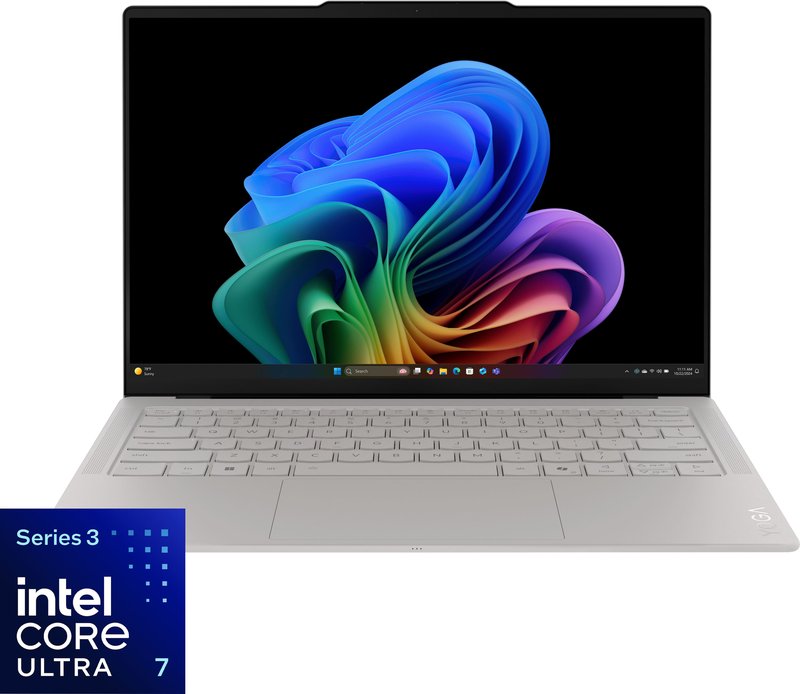
For graduate students who use Windows to check interview notes, work through long transcripts and carry a laptop across campus, start with the Lenovo Yoga Slim 7i Ultra Aura Edition 14-inch Gen 11. Its 975 g starting point and 32GB/1TB U.S. reference suit a day alternating between reading and editing. The ThinkPad X1 Carbon Gen 14 or LG gram 14 may be easier to use with a USB-A recorder, and a MacBook Air is worth a trial if the research software works on macOS. Lenovo product specifications · US configuration page.
The important part of an interview laptop is the trip between the conversation and the usable research record. A borrowed recorder, campus storage, a signed consent arrangement and a checked transcript may all belong to the workflow. Use a synthetic recording in your buying trial so you can check the complete route safely before bringing the laptop to an interview.
The shortlist at a glance
Start with the department’s indication about required software, classroom hardware and data storage. Then use sample materials to reproduce one representative working session. Compare local capacity while a reference and the actual editing tool stay open. Finish by deciding where you will read, where you will type and which work can move to an approved shared machine. Fit the order to those stages.
| US reference | Device mass | Screen | Battery | Best fit in this comparison |
|---|---|---|---|---|
| Yoga Slim 7i Ultra | 975 g starting | 14-inch 2880 × 1800 OLED touch | 75 Wh | Carrying a Windows transcript workspace from office to library |
| ThinkPad X1 Carbon Gen 14 | under 1 kg at family start | 14-inch WUXGA touch on this reference | 58 Wh | A local Windows toolset and regular recorder connections |
| MacBook Air 13 M5 | 1.23 kg listed | 13.6-inch 2560 × 1664 Liquid Retina | 53.8 Wh | A research group sharing a verified Mac workflow |
| Framework Laptop 13 | 1.30 kg listed | 13.5-inch 2256 × 1504 matte option | 61 Wh | A longer field project with swappable storage and ports |
| LG gram 14 | 2.47 lb listed, about 1.12 kg | 14-inch 1920 × 1200 IPS on the US model | 72 Wh | Basic transcripts and a small set of direct peripherals |
| Zenbook S 14 | about 1.2 kg listed for UX5406SA | 14-inch 2880 × 1800 OLED touch on the reference | 72 Wh | A Windows desk with an occasional HDMI connection |
Consider US laptop bodies with a reference or starting mass around 1.50 kg or below, then weigh the complete travel or teaching kit separately. For detachable models, measure the tablet alone and again with every accessory needed for the day. This comparison uses the manufacturer’s stated figures where available. Panel, finish and component changes can move the weight. Battery capacity in watt-hours describes stored energy, and runtime depends on the workload and the configuration tested.
For the broader shortlist, compare the same order with the graduate research software and memory comparison. Keep the preferred candidate’s order code beside the review so any difference in screen or connectors is easy to recognise.
Price the trip from recorder to coded text
Picture a recorder with two sample files and a folder of timestamped notes. Connect the recorder in the way your supervisor approves. Open the copy on the intended laptop, check that the duration and labels match and type a few timestamped decisions into the transcript. Try the same route with the laptop charging and headphones connected. A USB-C configuration can do the job with the proper accessories. Find out whether those are the ones you already own.
Distinguish the software that transcribes from the software that manages codes and notes. An approved cloud service may require an upload through a specific account. A department-provided local application may depend on particular Windows, Mac or driver support. Get the actual version and confirm what the university permits. A laptop that can replay and annotate a locally saved file will still be useful in a room where the network is inaccessible.
Budget space from a sample recording and derivative files
Suppose twelve 100 MB files make a 1.2 GB audio set. An additional permitted working copy brings the two copies to 2.4 GB before notes, transcripts and course material. Your actual file sizes can be substantially different. Check the filenames and durations from a recorder trial, then extrapolate to the number of sessions planned. The SSD decision should also cover the OS, application files and permitted working copies for the rest of the degree.
The deadline for correcting a transcript will often decide whether local storage matters. Open the two most frequently used files without relying on a stream from campus. Leave room for the restore and export alongside the live file. A cheap larger disk has limited value if policy restricts where interviews can be copied, so get the data-handling workflow from the institution first and budget for the kit it allows.
The decision changes when your work centers on campus Compute and Secure Local Work. Check which part of the kit can carry over into that routine.
Compare the screen with the task that keeps you seated
Put an audio timeline, the transcript and your code list where you normally work. Save two versions of the layout, one for the built-in screen and one for the shared desk display. A 14-inch 16:10 panel can be useful for keeping the preceding exchange visible while you correct a timestamp. A higher resolution helps only when the text stays readable at your actual zoom. Try shortcuts for pausing, stepping back and saving a note before deciding between a smaller notebook and a 14-inch one.
Test speech with your own comfortable headphones at an appropriate volume and in a place where only permitted material is audible. Get the model’s audio path onto your quotation. The Slim requires a supported connection for wired audio, while several of the alternatives include a physical headset jack. The small adapter is affordable if it works reliably and sits where your recorder cable still fits.
Plan the end of an interview day
Label the source recording and the checked working transcript according to the project’s data rules. Save a clean export for the approved review route before leaving your desk. A weekly plan needs a way to find and reopen a sample transcript after normal software updates. If you keep literature beside the field material, remember that bibliographic records and attached files can have different storage and sync arrangements.
Preserve enough context for the next researcher
Try giving the checked transcript and its permitted metadata to a colleague using the normal review route. Hide or replace identifiable details in the test. Ask them to confirm the duration, mark one uncertain phrase and find the original timestamp without asking you which file to open. The test demonstrates whether the keyboard, application and file format make review efficient and whether the authorized copies are available at the desk where you transcribe.
Next, compare the amount of physical kit each device required. An x86 laptop with familiar audio and USB-A sockets can use the approved recorder directly. A lighter USB-C notebook leaves more room for other supplies and may need the small adapter every time. Write the exact connection and headphones on the list. If your recorder’s files usually come through a staff-managed station, decide which of those connectors you still need at the editing desk.
6 models and the configuration to price
1. Yoga Slim 7i Ultra — Best for carrying a Windows transcript workspace from office to library
Configuration and connections. 14-inch Gen 11, US 83QK0000US: Core Ultra 7 355, integrated Intel Graphics, 32GB LPDDR5X and 1TB SSD. Three Thunderbolt 4 USB-C ports. HDMI, USB-A and wired audio require a suitable adapter. Specifications · US buying information.
The Slim’s 32GB and 1TB order leaves headroom for mixed documents and a local editing workflow. Use one USB-C connection for power and test the approved recorder and audio interface on the others. Its light body is valuable in a small shoulder bag if the required adapters can stay attached to the field kit instead of being borrowed each day.
In Notebookcheck’s review the 32GB Core Ultra 7 355 review unit weighed 978 g and ran for 10 hours 36 minutes in the site’s Wi-Fi web-browsing test. Use that as a reference for light browsing; video meetings, tethering and sustained work have different demands. Confirm the full order code. The adjacent Yoga Slim 7i without Ultra is a separate product and may have a different port layout. Notebookcheck Yoga Slim 7 Ultra review.
2. ThinkPad X1 Carbon Gen 14 — Best for a local Windows toolset and regular recorder connections
Configuration and connections. US 21V700AQUS reference: Core Ultra 7 355, Intel Graphics, 32GB LPDDR5X and 1TB SSD. Three Thunderbolt 4, USB-A, HDMI and a headset jack on the family. Specifications · US buying information.
The ThinkPad fits the lab that asks for a managed build and uses an HDMI screen or USB-A audio equipment. Get the precise support and display in the quote. Try a full transfer from the recorder with the laptop powered and the transcription software open, then check whether you need more accessories than the vendor illustration shows.
Native HDMI and USB-A give this platform a route to a wired display and a legacy USB peripheral while a USB-C port supplies power. The quoted panel and support term are separate buying decisions. Require the written quote to identify the display, operating-system edition and support entitlement. Fleet eligibility depends on the order the employer approves. Model documentation.
3. MacBook Air 13 M5 — Best for a research group sharing a verified Mac workflow
Configuration and connections. US 13-inch M5, choose 24GB unified memory and 1TB SSD for this comparison. MagSafe 3, two Thunderbolt 4 USB-C ports and a headphone jack. An HDMI display needs the appropriate cable or adapter. Specifications · US buying information.
A MacBook Air can be a straightforward transcription machine when the lab’s approved software and recorder ingest both work on macOS. Ask a supervisor to open the resulting export using their actual application. A 24GB/1TB quote is useful to compare if you routinely work with several large source files and editing tools at once.
Apple documents up to two external displays alongside the built-in display, within the supported resolution and refresh limits. MagSafe can handle power without occupying a Thunderbolt port. Confirm the Mac version of the mandatory application, add-in or endpoint tool with its vendor or your administrator before ordering. Model documentation.
4. Framework Laptop 13 — Best for a longer field project with swappable storage and ports
Configuration and connections. US DIY Ryzen AI 5 340 with Radeon 840M, configure with 32GB DDR5, 1TB NVMe and a licensed OS. Four modular bays. Choose USB-C, USB-A, HDMI or other Expansion Cards and check their supported bay positions. Specifications · US buying information.
A Framework with a filled-out memory and SSD quote makes sense when repair and storage planning are already part of the project. Position a USB-A expansion card and a charging port so both are available with a reader attached. Include the setup work and approved system image in the buying decision.
Replaceable memory and configurable ports can matter across several years of use. A purchased set of modules still requires the buyer to allocate bays for power, the screen and each attached device. Quote memory, SSD, OS, power adapter and selected cards explicitly for a DIY order. Price the prebuilt option separately if setup time matters. Model documentation.
5. LG gram 14 — Best for basic transcripts and a small set of direct peripherals
Configuration and connections. US 14Z90T-G.AAB2U1, Core Ultra 5 226V, Intel Arc graphics, 16GB RAM and 512GB SSD. Two Thunderbolt 4, two USB-A, HDMI and a headphone jack. Specifications · US buying information.
Try a 16GB gram if you edit one transcript at a time and connect the recorder and headphones directly. Check what concurrent workload the computer can actually sustain before spending budget on memory. Use the 512GB internal disk as a firm scope for permitted working data, with the research backup handled through the project’s normal arrangement.
The large list of native connectors suits ordinary office or research peripherals. The chosen 16GB/512GB combination is best evaluated with the simultaneous documents and applications that stay open during a busy session. Compare a 16GB configuration with your actual peak workspace and how much of the 512GB disk must be kept free. Read the full 14Z90T suffix on the quote. Model documentation.
6. Zenbook S 14 — Best for a Windows desk with an occasional HDMI connection
Configuration and connections. US UX5406SA-PS79T: Core Ultra 7 258V with Intel Arc graphics, 32GB and 1TB SSD. Two Thunderbolt 4, USB-A, HDMI and headphone audio on the reference. Specifications · US buying information.
The x86 Zenbook keeps a 32GB choice in view if you like the Slim but want more connections already on the body. Try the dense transcript at your usual text size on its glossy OLED. The more useful display is the one you can read without constantly shifting panes or posture.
The reference keeps a direct HDMI path and pairs 32GB memory with an x86 Windows platform. Its OLED panel is glossy, so check readability with bright windows in the positions you normally use. Match the US suffix and the touchscreen line. ASUS lists the later UX5406AA on the same product page, with its own processor choices. Model documentation.
A purchase trial that ends in usable academic work
Try one interview file from capture to checked transcript. Prepare a synthetic ten-minute audio file, an interview marker sheet and a sample anonymized codebook. Use the same source materials on each system and ask the same person to check the end result. Start with the charger, network and version of the software you expect to have at the destination. Record what needs permission or an approved alternative before counting any device as eligible. Put the results for Yoga Slim 7i Ultra and ThinkPad X1 Carbon Gen 14 beside one another so the acceptance decision follows the actual scenario.
For the second pass, pause after transfer and reopen the permitted copy in the intended app with the network disconnected. Use an ordinary supported way to recover the work so you can repeat it later without assistance. Note the time spent restoring the accessory or software and the time left to finish the job. The useful benchmark is that a second approved reader can identify the relevant recording and corrected timestamp from the export. Keep a copy of the settings for the configuration that passes, including changes to display scaling, input and power.
Have the lab’s approved transcription station with a tested synthetic file ready during the test. Change only one part of the setup at a time after a problem. A device trial should tell you whether replacing the computer would solve it, or whether a different cable, application setting or room arrangement would do the job. Consider the practical consequence when comparing candidates: an analogue headset or a dependable recorder connection can justify a heavier setup if repeated transfers are the slow step. Keep the published capability beside your observation so a future purchase can reproduce the working setup.
Where to set the budget for this program
Use a planning ceiling of $1,650 before tax for this example. If the line for the approved headphones and the exact recorder adapter reserves $100, the laptop has $1,550 of room. Compare the retailer or school quotes using the same storage, included equipment and support assumptions. These amounts illustrate the arithmetic of a purchase decision. The linked US listings and written offers provide the actual pricing and availability.
For every quote, record the exact model code, OS edition, panel, installed memory and size of the SSD. List any equipment your institution or employer supplies separately. For an older generation still offered by a reseller, ask how much time remains on the coverage you are buying and how you would replace a bundled accessory. Use the documented requirements of one interview file from capture to checked transcript to decide which configuration can drop an accessory or start with less local capacity.
Documentation for the actual setup
Zotero gives users settings for attachment syncing and when files are downloaded. A library record and a locally available attachment have different storage and preparation implications. Reopen one checked sample offline to learn what the current setting does before comparing the capacity of two laptop configurations. Zotero attachment syncing settings.
Zotero recommends using its supported library sync rather than putting its database in a general cloud sync folder. Use the application’s documented arrangement and keep the project’s approved backup. Reopen a sample in the secondary workspace to see which reference records and permitted attachments are available during a deadline. Zotero guidance on using multiple computers.
Microsoft lists native Microsoft 365 apps for Windows on Arm and explains how applications and drivers differ. Write the versions of the work applications and the peripherals you need on the same page as the laptop’s processor. Confirm an architecture-specific driver with the vendor before using a general compatibility result to approve the system. Microsoft’s Windows on Arm app and peripheral FAQ.
For a second comparison of a full working day, see theses Built from Large Scanned Sources. Use the same quote when the equipment requirements overlap.
Frequently asked questions
How much storage should I put on the quote?
Measure one approved sample project and list how many will stay local. Account for original material, allowed copies, exports and software. The 1TB order can be suitable when the work remains local, while a 512GB order can cover a smaller working set and an institutional archive.
Do I need the fastest laptop to transcribe?
The application’s workflow decides. If an approved remote service does the compute, network and file handling may be the time-consuming bits. Trial any local transcription on synthetic samples and compare the actual result quality and turnaround with the current department method.
Should I sync recordings into my reference manager?
Use only arrangements permitted by your research project. Zotero can handle literature metadata and attachment settings, while recorded participant material can be governed separately. Keep those decisions distinct when budgeting local space and reviewing backup.
Sources
- Lenovo Yoga Slim 7i Ultra Aura Edition specifications
- Yoga Slim 7i Ultra US product and purchase details
- Lenovo ThinkPad X1 Carbon Gen 14 Aura Edition specifications
- ThinkPad X1 Carbon Gen 14 US product and purchase details
- Apple MacBook Air 13-inch M5 specifications
- MacBook Air 13 M5 US product and purchase details
- Framework Laptop 13 AMD Ryzen AI 300 specifications
- Framework Laptop 13 US product and purchase details
- LG gram 14 14Z90T-G.AAB2U1 specifications
- ASUS Zenbook S 14 UX5406SA specifications
- Zenbook S 14 US product and purchase details
- Zotero attachment syncing settings
- Zotero guidance on using multiple computers
- Microsoft’s Windows on Arm app and peripheral FAQ